Get Storm Damage Help Fast
Metal vs. Asphalt Roofing: Comparing Costs and Longevity of Modern Solutions
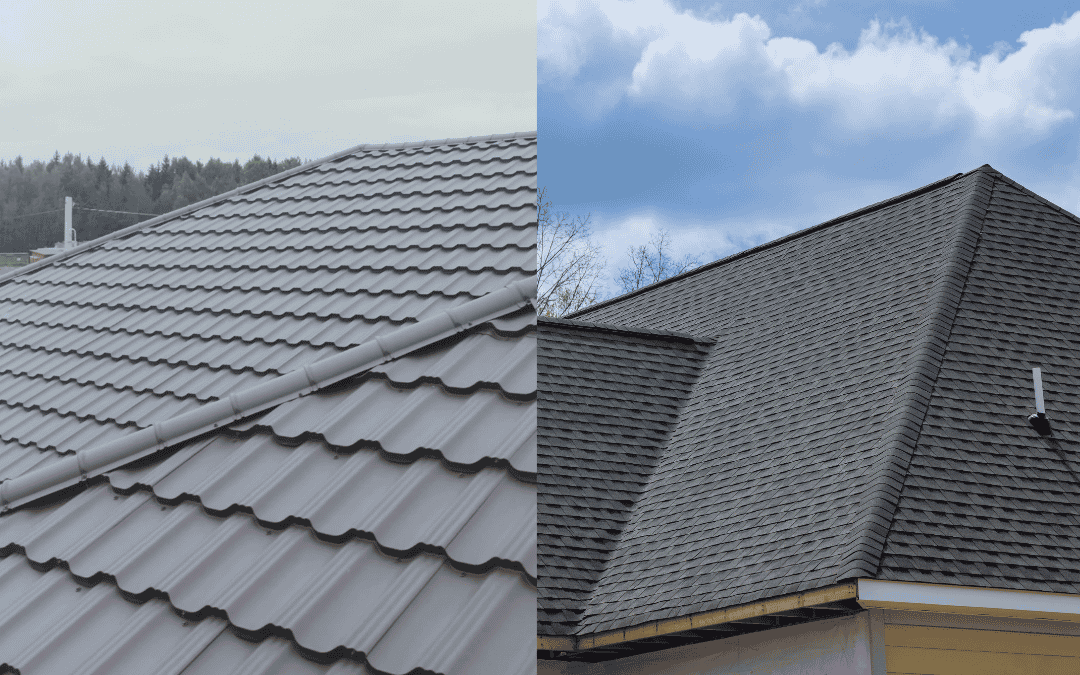
Compare Metal and Asphalt Roofing Costs and Lifespan
Make an Informed Investment Decision
Roofing Choices
Selecting between metal and asphalt roofing determines not only your initial investment but the performance and cost profile of your home for decades. Both materials dominate residential roofing in Pennsylvania, yet they differ fundamentally in structure, installation method, and lifecycle behavior.
Asphalt shingle roofing remains the most common choice across Wrightsville and Lancaster County. Dimensional asphalt shingles consist of a fiberglass mat coated with asphalt and mineral granules, delivering reliable weather protection at accessible price points. Standard architectural shingles typically weigh 200 to 350 pounds per square (100 square feet), install quickly over existing decking, and integrate easily with most residential roof designs.
Metal roof installation introduces an entirely different system. Standing seam metal panels, the most durable residential option, interlock along raised ribs that shed water continuously without exposed fasteners. Metal roofing materials include steel (galvanized or Galvalume-coated), aluminum, and occasionally copper or zinc. These panels weigh 50 to 150 pounds per square, significantly lighter than asphalt, and create a continuous barrier that performs exceptionally well in high-wind and heavy-snow conditions common in Pennsylvania winters.
The distinction extends beyond material composition. Asphalt shingles rely on overlapping layers to create a water-shedding surface, while metal roofing forms a continuous envelope. This structural difference drives the divergence in cost, longevity, and maintenance requirements that homeowners must weigh carefully before committing to roof replacement service.
Initial Investment
The upfront cost difference between metal and asphalt roofing represents the single most decisive factor for many homeowners. For a typical 2,000-square-foot residential roof in the Wrightsville area, expect these ranges for complete roof installation including materials, labor, permits, and standard accessories.
Asphalt shingle roofing generally costs between $7,500 and $12,000 for mid-grade architectural shingles. Basic three-tab shingles may lower costs to $5,500 to $8,000, though most homeowners select dimensional shingles for better wind resistance and aesthetic appeal. Premium designer shingles that mimic slate or shake patterns can push totals to $13,000 to $18,000, narrowing the gap with entry-level metal options.
Metal roof installation for the same 2,000-square-foot home typically ranges from $17,000 to $30,000, depending on material grade and panel profile. Standing seam steel with Galvalume coating occupies the lower end, while aluminum or specialty finishes increase costs. Copper or zinc systems can exceed $40,000, placing them outside most residential budgets.
This two-to-three-times multiplier reflects not only material costs but specialized labor. Metal roofing demands precision cutting, custom flashing fabrication, and fastener techniques that prevent thermal expansion issues. Fewer roofing contractors in Lancaster County possess the training for proper metal installation, which can extend lead times and increase labor rates. In contrast, asphalt shingle installation follows standardized methods familiar to virtually all local roofers, keeping labor costs competitive and project timelines short.
Installation complexity matters beyond the initial invoice. A poorly executed metal roof installation will leak at panel seams or fastener points, while improper asphalt installation typically results in wind blow-offs or premature granule loss. Both scenarios require costly roof repair service, but metal errors often demand partial panel replacement rather than simple patching.
Durability Reality
Lifespan projections separate perceived value from actual long-term performance. Metal roofing consistently outlasts asphalt, but the advantage shrinks when you account for real-world conditions and homeowner behavior in Pennsylvania’s climate.
Asphalt shingle roofing typically delivers 20 to 25 years of functional service in the Mid-Atlantic region. Premium architectural shingles carry 30-year or even lifetime warranties, but those guarantees pro-rate coverage and rarely reflect actual replacement timelines. In Wrightsville, where summer heat regularly exceeds 90 degrees and winter freezes cycle repeatedly through March, thermal expansion and contraction stress the asphalt matrix. Granule loss accelerates after year fifteen, exposing the underlying mat to UV degradation and moisture infiltration. Homeowners often schedule roof replacement service between years eighteen and twenty-three, even when shingles remain nominally intact.
Metal roofing extends functional lifespan to 40 to 60 years for steel systems and 50 to 70 years for aluminum. Standing seam panels resist UV breakdown, shed snow and ice effectively, and tolerate thermal cycling without cracking. The Galvalume coating on steel panels provides corrosion resistance that outlasts painted finishes, though minor surface rust can develop in coastal or high-humidity environments. Fastener integrity matters more than panel condition; concealed fasteners in standing seam systems avoid this vulnerability, while exposed-fastener metal (common in agricultural buildings) requires gasket replacement every fifteen to twenty years.
This longevity advantage translates to lifecycle cost savings. A homeowner installing asphalt shingles at age forty may require two roof replacements before retirement, totaling $25,000 to $36,000 over fifty years. The same homeowner selecting metal roofing invests $20,000 to $28,000 once, avoiding a second installation entirely. Financing and opportunity costs complicate this math, but the fundamental trade-off remains: higher upfront investment for metal in exchange for eliminating future replacement cycles.
Storm damage roof repair introduces another dimension. Pennsylvania’s spring and summer storms bring hail, high winds, and heavy rain. Asphalt shingles withstand impact reasonably well but lose tabs in sustained 60-mph winds. Metal panels resist wind uplift far better and dent rather than tear under hail impact. Insurance claims for roof damage slightly favor metal over asphalt in actuarial data, though premium discounts vary by carrier and rarely offset the initial cost difference.
Pennsylvania Performance
Climate conditions in Wrightsville and surrounding Lancaster County shape roofing performance in ways that shift the cost-versus-lifespan calculus. Pennsylvania’s four-season weather tests both materials differently, and local experience reveals patterns that generic comparisons miss.
Freeze-thaw cycling defines winter roofing stress across the region. Water enters minor gaps beneath asphalt shingle edges, freezes overnight, expands, and gradually lifts shingle tabs. By late February, homeowners often notice lifted corners or small gaps that accelerate water infiltration during spring thaw. Metal roofing eliminates this failure mode entirely. Continuous panels with concealed fasteners prevent water from pooling beneath the surface, and the slick finish sheds ice before significant buildup occurs.
Summer heat creates a different challenge. Asphalt absorbs solar radiation, raising surface temperatures to 160 degrees or higher on July afternoons. This heat radiates into attic spaces, increasing cooling loads and accelerating shingle aging. Dark-colored asphalt shingles worsen the effect; lighter tones reduce it modestly. Metal roofing reflects more solar energy, particularly with reflective coatings, keeping attic temperatures ten to fifteen degrees cooler. Energy savings vary by home insulation and HVAC efficiency, but homeowners in poorly insulated older homes around Wrightsville report noticeable comfort improvements after metal roof installation.
Wind performance matters during spring storm season, when Lancaster County sees frequent severe thunderstorms with straight-line winds exceeding 50 mph. Asphalt shingles rely on adhesive strips and nail penetration for wind resistance; improperly installed shingles or aged adhesive fail predictably. Metal panels interlock mechanically along seams and anchor through concealed clips, distributing wind uplift across the entire roof structure. A well-installed standing seam metal roof tolerates winds above 120 mph, far exceeding residential code requirements and providing tangible security during severe weather.
Moisture management extends beyond precipitation. Morning dew and high humidity in river valleys near the Susquehanna create conditions for algae growth on asphalt shingles. Black streaks appear within five to eight years on north-facing slopes, driven by Gloeocapsa magma algae feeding on limestone filler in shingles. Algae-resistant shingles delay but do not eliminate the issue. Metal roofing resists biological growth entirely, maintaining appearance for decades without chemical treatments or soft washing.
Selection Factors
Choosing between metal and asphalt roofing requires aligning material characteristics with your financial situation, home plans, and priorities. Neither option is universally superior; the right choice depends on context.
Budget constraints drive most decisions. If upfront cost is the controlling factor and you plan to sell within ten to fifteen years, asphalt shingle roofing delivers reliable protection without straining finances. A quality asphalt installation from a qualified roofing contractor will serve the home adequately through a typical ownership period, and buyers in the Wrightsville market expect asphalt roofs on most homes. Metal roofing offers minimal resale premium despite higher cost, so short-term owners rarely recover the investment.
Long-term ownership flips the calculation. Homeowners planning to remain in place for twenty-five years or more benefit directly from metal’s extended lifespan. Avoiding a second roof replacement eliminates not only the cost but the disruption, waste, and decision fatigue of another roofing project. Retirees on fixed incomes particularly value this certainty, as metal roofing removes a major future expense from financial planning.
Architectural fit matters more than many realize. Standing seam metal suits contemporary, farmhouse, and modern designs naturally, while asphalt shingles integrate seamlessly with traditional colonial, Cape Cod, and ranch styles common in Lancaster County. Homeowners associations occasionally restrict metal roofing in established neighborhoods; verify covenants before committing to avoid costly design revisions.
Professional assessment from a qualified roofing services provider helps clarify these trade-offs. A thorough roof inspection identifies structural considerations that influence material choice, such as deck condition, ventilation adequacy, and load-bearing capacity. Metal’s lighter weight benefits homes with marginal structural support, while heavier asphalt may require reinforcement on older roof frames. Slope also affects suitability; metal performs better on low-slope roofs (3:12 to 4:12 pitch) where water drainage challenges asphalt systems.
Maintenance expectations differ subtly but meaningfully. Asphalt shingles require periodic inspection for lifted tabs, granule loss, and flashing deterioration, with minor roof repair service every five to eight years. Metal roofing needs less frequent attention but benefits from fastener checks and gutter cleaning to prevent water backup at panel edges. Both materials demand proper attic ventilation to avoid condensation and thermal stress; inadequate ventilation voids most manufacturer warranties.
Energy considerations may tip the balance for environmentally conscious homeowners or those seeking utility savings. Metal roofing’s reflectivity reduces cooling costs modestly, while asphalt’s thermal mass can moderate temperature swings in well-insulated homes. Neither effect is dramatic, but combined with longevity and recyclability, metal offers a sustainability edge that appeals to some buyers.
Ultimately, your decision should reflect both the numbers and your specific circumstances. If the higher initial cost of metal roof installation fits comfortably within your budget and you value long-term durability, metal delivers measurable advantages in Pennsylvania’s climate. If near-term affordability and familiarity matter more, quality asphalt shingle roofing from a skilled installer will protect your home reliably for two decades or more. Both paths work when matched to the right situation.
Before finalizing your choice, consider scheduling a professional evaluation to discuss your roof’s condition, your home’s structural characteristics, and your long-term plans. Understanding how material performance aligns with your priorities transforms an overwhelming decision into a confident investment in your home’s future.